Category: Buying

  • What Happens if Renovations Were Done Without a Permit in Ontario?

    What Happens if Renovations Were Done Without a Permit in Ontario?

    Ontario Property & Renovation Guide · Updated for 2026

    Finding out that a renovation may have been completed without a required building permit can create uncertainty for homeowners and buyers. It does not automatically tell you whether the work is unsafe or what the municipality will require, but it is a reason to investigate before relying on the renovation or undertaking additional work.
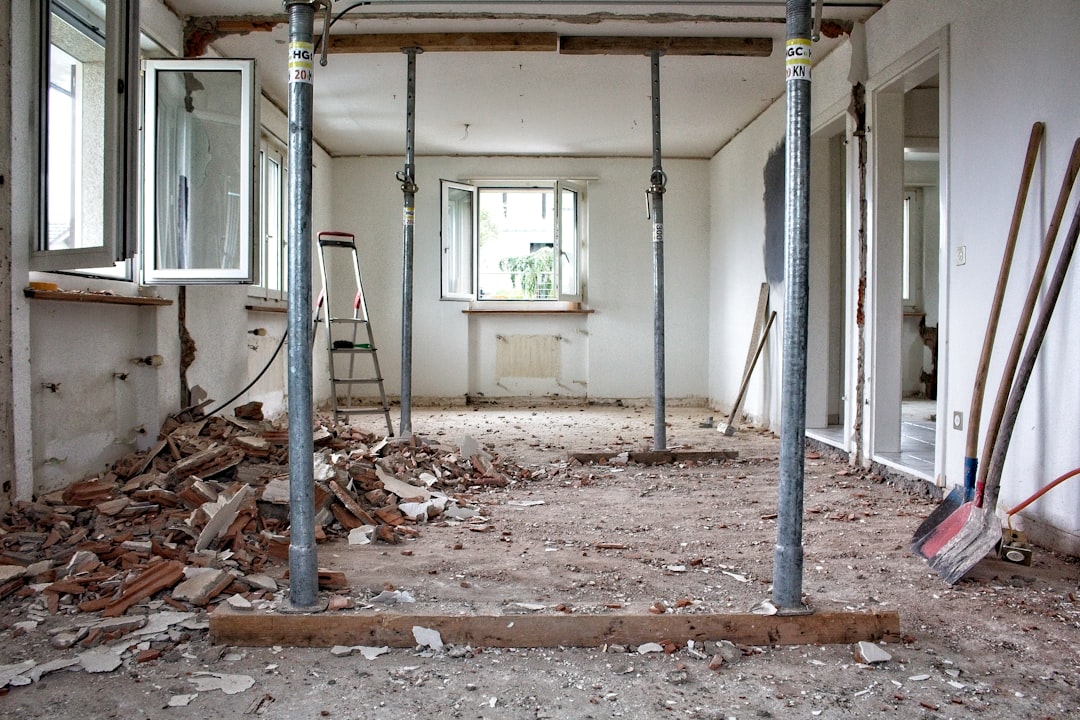
    Home renovation under construction in Ontario
    Photo by Stefan Lehner on Unsplash

    Short answer: if work required a building permit but was completed without one, contact the local building department to determine the property’s permit history and the process for addressing the work. The municipality may need information, drawings, inspections, corrective work or other steps before the issue can be resolved.

    Why Building Permits Matter

    Ontario’s building-permit system allows municipal officials to review construction for compliance with the Building Code, zoning and other applicable law. The Building Code Act generally prohibits constructing or demolishing a building unless the required permit has been issued.

    How Unpermitted Work Is Discovered

    • a buyer or homeowner searches municipal permit records
    • a home inspector identifies evidence of alterations
    • a later permit application exposes earlier construction
    • a neighbour or other party raises a concern with the municipality
    • electrical, insurance or appraisal questions reveal missing documentation

    What Can Happen Next?

    The outcome is property-specific. A building department may need to determine what was constructed, whether a permit should have been obtained and whether the work complies with current or applicable requirements. Depending on the circumstances, this can involve drawings, professional review, opening concealed construction for inspection, corrective work, additional approvals or fees.

    Do not assume that simply applying for a permit after the fact automatically legalizes existing construction. Ask the municipality what documentation and inspections it requires for that specific property.

    Can You Get a Permit After the Work Is Done?

    There is no single Ontario-wide outcome for previously completed work. A municipality may have a process for addressing construction completed without the required permit, but the steps depend on the property and the work. The building department may require drawings, professional review, inspections, portions of concealed construction to be exposed, corrective work, additional approvals or applicable fees before it can determine compliance.

    The safest approach is to contact the local building department with the property address and as much information as possible about what was changed and when. Do not represent unpermitted work as approved merely because it has existed for many years.

    What About Electrical Work?

    Electrical compliance is separate from a municipal building permit. ESA states that almost all electrical work must be reported through a notification of work and that reviewed work can receive a Certificate of Acceptance. If electrical alterations appear undocumented, contact ESA or an appropriately licensed electrical contractor about the correct process.

    Buying a House With Possible Unpermitted Renovations

    Buyers should distinguish between visible quality and documented compliance. A finished basement, addition, removed wall or altered layout can look professionally completed while still raising permit-history questions.

    • Ask what renovations were completed and when.
    • Request permits, approved drawings and final inspection records where available.
    • Check municipal records rather than relying only on verbal assurances.
    • Use appropriate professional inspections and advice for structural, electrical, plumbing or other concerns.
    • Consider how unresolved work could affect future renovations, insurance, financing or resale.

    For basement-specific research, see Basement Renovation Permits in Ontario and Buying a House with a Basement Apartment.

    If You Already Own the Property

    Start with records, not demolition. Identify the known scope of the renovation and ask the municipality what records it holds. If further investigation is required, the building department or appropriate qualified professionals can help determine what documentation or physical review is necessary.

    A Practical Due-Diligence Checklist

    • Search the municipal permit history.
    • Compare approved plans with the current layout where records exist.
    • Check whether permits were finalized or remain open.
    • Investigate electrical work separately through ESA where relevant.
    • Do not conceal questionable work before required inspections.
    • Keep all new approvals and inspection documents with the property records.

    Explore more information in Buying, Renovations, and Zoning & Permits.

    Frequently Asked Questions

    Can an old renovation still be an issue if a previous owner did the work?

    Potentially. The practical question is the status of the property and work now. Municipal requirements and available records determine the appropriate next steps.

    Can a municipality inspect work after it is finished?

    A building department may require inspection or other evidence when addressing work that should have been permitted. Concealed construction can make verification more complicated.

    Does a home inspection prove renovations were permitted?

    No. A property inspection and a municipal permit-record search answer different questions. Permit status should be verified through the applicable authority.

    Official Resources


    Ontario Home Intel is an independent educational resource and is not a real estate agency or brokerage. Information is general educational information only and is not real estate, legal, engineering, building-code, electrical, inspection, insurance or other professional advice. Verify municipal and property-specific requirements and obtain appropriate professional advice before acting.

  • Ontario Land Transfer Tax: 2026 Guide

    Ontario Land Transfer Tax: 2026 Guide

    Ontario Buying Guide

    Land transfer tax can be one of the largest closing costs when purchasing real estate in Ontario. The amount generally increases with the value of the consideration, and Toronto buyers can face an additional municipal land transfer tax.

    Updated for 2026. Here is how Ontario land transfer tax works, how the brackets are applied and where first-time buyer refunds can reduce the amount payable.

    The Short Answer

    Ontario land transfer tax is generally paid when an interest in land is acquired and the transaction is registered. The tax uses graduated brackets, meaning different portions of the purchase price are taxed at different rates.

    Eligible first-time homebuyers may receive an Ontario refund of up to $4,000. Buyers purchasing in Toronto may also pay Toronto’s Municipal Land Transfer Tax in addition to the provincial tax.

    Ontario Land Transfer Tax Rates for 2026

    For a property containing one or two single-family residences, Ontario’s current provincial land transfer tax brackets are:

    Portion of ValueTax Rate
    Up to $55,0000.5%
    Over $55,000 to $250,0001.0%
    Over $250,000 to $400,0001.5%
    Over $400,000 to $2,000,0002.0%
    Over $2,000,0002.5%

    The 2.5% provincial bracket above $2 million applies to property containing one or two single-family residences. Different treatment applies to certain other property types.

    View Ontario’s official land transfer tax calculation information.

    How the Graduated Tax Works

    A common misunderstanding is that once a purchase price enters a higher bracket, the entire purchase price is taxed at the higher rate.

    That is not how the graduated calculation works. Each tax rate applies only to the portion of the value within that bracket.

    Example: $750,000 Ontario Home

    • First $55,000 × 0.5% = $275
    • Next $195,000 × 1.0% = $1,950
    • Next $150,000 × 1.5% = $2,250
    • Remaining $350,000 × 2.0% = $7,000

    Estimated Ontario land transfer tax: $11,475.

    An eligible first-time purchaser qualifying for the maximum $4,000 Ontario refund could reduce that provincial amount to approximately $7,475.

    Ontario First-Time Homebuyer Refund

    Eligible first-time homebuyers can receive a refund of all or part of Ontario land transfer tax, up to a current maximum of $4,000.

    Among the provincial eligibility requirements, a purchaser generally must be at least 18 and cannot previously have owned a home or an interest in a home anywhere in the world. Spousal ownership rules can also affect eligibility.

    Eligibility for other federal first-time buyer programs does not necessarily mean a purchaser qualifies for Ontario’s land transfer tax refund. The definitions can differ.

    Read Ontario’s official first-time homebuyer refund requirements.

    What About Toronto?

    Purchases within the City of Toronto can be subject to Toronto Municipal Land Transfer Tax (MLTT) in addition to Ontario land transfer tax.

    That means a Toronto buyer may have two separate land transfer tax calculations at closing.

    Toronto MLTT Rates in 2026

    For residential property containing one or two single-family residences, Toronto’s revised high-value MLTT rates effective April 1, 2026 are:

    Portion of ValueToronto MLTT Rate
    Up to $55,0000.5%
    Over $55,000 to $250,0001.0%
    Over $250,000 to $400,0001.5%
    Over $400,000 to $2 million2.0%
    Over $2 million to $3 million2.5%
    Over $3 million to $4 million4.40%
    Over $4 million to $5 million5.45%
    Over $5 million to $10 million6.50%
    Over $10 million to $20 million7.55%
    Over $20 million8.60%

    Different MLTT treatment applies to certain other property types.

    Toronto also charges an administration fee for MLTT transactions. Because municipal rates and fees can change, confirm the amount applicable on the actual closing date.

    View current Toronto MLTT rates and fees.

    Toronto First-Time Buyer Rebate

    Qualifying first-time purchasers may also be eligible for a Toronto MLTT rebate of up to $4,475.

    This is separate from Ontario’s provincial refund, so a qualifying Toronto first-time buyer may potentially benefit from both programs.

    When Is Land Transfer Tax Paid?

    For a typical Ontario resale purchase, land transfer tax is generally dealt with by the buyer’s lawyer as part of registration and closing.

    Because it can represent a significant cash requirement, buyers should include land transfer tax in their closing-cost budget well before the closing date.

    Is Land Transfer Tax Included in the Mortgage?

    Land transfer tax should generally be treated as a closing cash requirement rather than assumed to be included in the mortgage advance.

    Ask the lender and lawyer about the specific funds required to close the transaction.

    Calculate Your Estimate

    Ontario Home Intel’s calculator can estimate provincial land transfer tax, Toronto MLTT where applicable and potential first-time buyer relief.

    Other Closing Costs to Remember

    • Legal fees and disbursements
    • Title insurance
    • Property tax adjustments
    • Utility or condominium adjustments where applicable
    • Home inspection costs
    • Appraisal costs where applicable
    • Mortgage default insurance-related costs where applicable
    • Moving expenses

    FAQ

    Ontario Land Transfer Tax Questions

    Does every Ontario buyer pay the same land transfer tax rate?

    No. Ontario uses graduated brackets, so the amount depends on the value of the consideration and, in some cases, the type of property.

    How much is the Ontario first-time buyer refund?

    The maximum provincial first-time homebuyer land transfer tax refund is currently $4,000 for qualifying purchases.

    Do Toronto buyers pay Ontario land transfer tax too?

    Yes. A property purchase within Toronto can be subject to Ontario land transfer tax as well as Toronto Municipal Land Transfer Tax.

    Does being a first-time buyer automatically eliminate land transfer tax?

    No. Eligible buyers may receive refunds or rebates up to the applicable program limits. If the tax exceeds the available refund, the remaining amount is still payable.

    Continue Your Research


    General information only: Land transfer tax rules, rates, rebates and eligibility can change and may depend on property type and purchaser circumstances. This guide is for general educational purposes and is not legal, tax, financial or real estate advice. Confirm the amount payable with your lawyer and the applicable government authority.

  • Buying a House with a Basement Apartment

    Buying a House with a Basement Apartment

    ONTARIO BUYER GUIDE

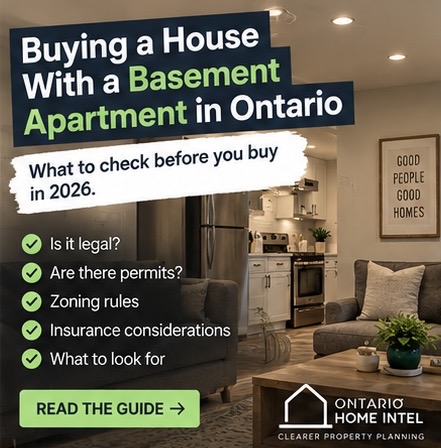
    Buying a House With a Basement Apartment in Ontario

    What buyers should investigate about zoning, building permits, legal status, rental income and municipal records before relying on a basement unit.

    The Biggest Mistake to Avoid

    Do not assume that a basement apartment is legal simply because it already exists, has tenants, has a separate entrance or is advertised as an apartment.

    If the basement unit is important to your decision to buy, investigate its status before relying on it for rental income, family accommodation or future resale.

    1. Ask How the Unit Was Established

    Start by asking what documentation exists for the basement apartment.

    • Was a building permit obtained?
    • Was the permit closed after required inspections?
    • Are there municipal records identifying the additional unit?
    • Does the municipality require registration or licensing?
    • Were any zoning approvals, variances or other permissions required?
    • Were renovations completed before or after the current owner purchased the property?

    A seller’s description can be useful background information, but property-specific records and professional advice may be needed when the legal status matters to the purchase.

    2. Check the Zoning

    Ontario’s Additional Residential Unit framework generally allows up to three residential units on qualifying urban residential land, but local zoning standards and property-specific constraints still matter.

    Depending on the property, investigate:

    • Whether the residential use is permitted
    • Parking requirements
    • Entrance locations
    • Lot or building restrictions
    • Servicing requirements
    • Conservation authority restrictions
    • Heritage requirements

    3. Look for Building Permits

    Creating a basement apartment involves more than putting in a kitchen and closing a door between floors. New residential units generally require a building permit and inspections.

    Municipal permit records can help establish whether regulated work was reviewed and inspected.

    Depending on the age of the unit and municipality, records may not always tell the entire story. If there are concerns, ask the appropriate municipal department or qualified professional what additional investigation is reasonable.

    4. Don’t Rely on Rental Income Until You Understand the Unit

    A basement apartment can make a property more affordable for some buyers, but projected rent should not replace proper due diligence.

    Before building a purchase decision around rental income, consider questions such as:

    • Is the unit currently rented?
    • Is there a written tenancy agreement?
    • What rent is actually being paid?
    • What utilities are included?
    • Are there separate meters?
    • Who is responsible for internet, parking and laundry?
    • What are the operating costs?
    • Will the lender recognize some or all rental income for qualification?

    Mortgage qualification and treatment of rental income are lender-specific. Confirm financing assumptions directly with the lender or mortgage professional.

    5. Tell Your Insurer About the Apartment

    A home with a separate residential unit may be treated differently from a single-unit home by an insurer.

    Before closing, tell the insurance provider how the property is actually configured and used. Ask what information or documentation the insurer requires and confirm that suitable coverage can be obtained.

    6. Inspect the Basement as a Residential Unit

    The fact that a basement looks recently renovated does not mean the hidden work was completed properly.

    A home inspection may identify visible concerns, but some issues may require specialized evaluation. Areas worth paying attention to can include:

    • Moisture and drainage
    • Foundation conditions
    • Electrical work
    • Plumbing
    • Heating and ventilation
    • Windows and exits
    • Fire separation
    • Smoke and carbon monoxide alarms
    • Ceiling heights
    • Previous structural changes

    7. Understand the Existing Tenancy

    If the property is sold with a tenant in place, the purchase may involve residential tenancy issues in addition to the real estate transaction.

    Buyers should obtain appropriate information and legal advice about the tenancy, rent, deposits, notices, vacant possession and their intended use of the property rather than assuming the tenant must leave because ownership changes.

    Basement Apartment Buyer Checklist

    • Ask for available permits and plans
    • Check municipal zoning
    • Confirm any registration or licensing requirements
    • Investigate whether permits were finalized
    • Review the existing tenancy if occupied
    • Confirm actual rent and included utilities
    • Discuss rental-income treatment with the lender
    • Disclose the unit to the insurer
    • Inspect the basement carefully
    • Have appropriate legal documents reviewed
    • Do not rely on the listing description alone

    Buying a Property With an Existing Apartment?

    If the basement unit is part of the reason you’re considering a property, make its status part of your due diligence rather than something you investigate after closing.

    FAQ

    Buying With a Basement Apartment: Common Questions

    Does a separate entrance mean the basement apartment is legal?

    No. A separate entrance is only one physical feature of the property. It does not establish that the unit satisfies zoning, permit, Building Code or municipal requirements.

    Can I use basement rent to qualify for a mortgage?

    Possibly, but lenders have their own policies regarding rental income and the documentation they require. Confirm the financing treatment with your lender or mortgage professional.

    Should I ask for building permits?

    Yes, if the legal status or construction history of the basement unit matters to your purchase, available municipal permit records can be an important part of due diligence.

    Can a basement tenant stay after the house is sold?

    A sale does not automatically end every residential tenancy. The facts, agreements and Ontario residential tenancy rules need to be considered. Obtain legal advice for the specific situation.

    Related Ontario Home Intel Guides

    Last reviewed: September 6, 2026.

    General information only: Ontario Home Intel provides general educational information and is not a substitute for legal, real estate, lending, insurance, inspection, building-code, planning, tax or other professional advice. Property records, tenancy issues, municipal requirements and financing policies vary. Verify all material information for the specific property before making a purchase decision. Using this website or making an inquiry does not create a real estate representation relationship.

  • Additional Rental Units in Ontario

    Additional Rental Units in Ontario

    ONTARIO HOUSING GUIDE

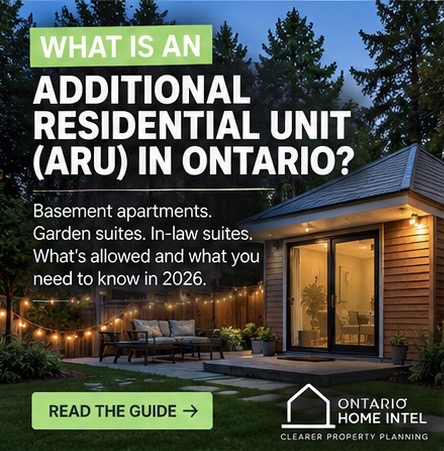
    What Is an Additional Residential Unit (ARU) in Ontario?

    A practical 2026 guide to basement apartments, secondary units, garden suites, zoning, building permits and Ontario’s Additional Residential Unit framework.

    The Short Answer

    An Additional Residential Unit, usually shortened to ARU, is an additional self-contained residential unit located in a house or, in some circumstances, in an accessory building on the same property.

    Common examples include a basement apartment, secondary suite, in-law suite, unit above a garage, coach house or garden suite.

    Ontario’s planning framework generally permits up to three residential units on qualifying urban residential land, but that does not mean every lot can automatically accommodate every type of unit. Building permits, municipal zoning standards, servicing, access, parking and other property-specific requirements still matter.

    What Counts as an ARU?

    An ARU is generally a separate residential unit with the facilities needed for independent living, such as sleeping space, a kitchen and bathroom facilities.

    You may hear municipalities, builders and homeowners use several different terms for essentially similar forms of housing:

    • Additional Residential Unit
    • ARU
    • Accessory Dwelling Unit
    • ADU
    • Secondary suite
    • Second unit
    • Basement apartment
    • Accessory apartment
    • Garden suite
    • Coach house
    • Laneway suite
    • In-law suite

    The terminology used by your municipality may differ, so always check the local zoning bylaw and municipal guidance that applies to the property.

    How Many Units Can You Have?

    Ontario’s Planning Act generally prevents municipal zoning bylaws from prohibiting certain three-unit configurations on qualifying urban residential land.

    Common configurations can include:

    • Three residential units in the main house, with no residential unit in an ancillary building; or
    • Up to two residential units in the main house plus one residential unit in an ancillary building, such as a qualifying garden suite or converted accessory building.

    This is a provincial land-use permission. It does not eliminate the need to comply with the Building Code, municipal zoning standards that remain applicable, servicing requirements or other approvals.

    Does This Apply Everywhere in Ontario?

    No. The province’s broad three-unit framework applies to qualifying urban residential land. Rural, agricultural, environmentally sensitive and otherwise specially regulated properties can require a different analysis.

    For example, properties in prime agricultural areas are subject to separate provincial planning policies. Conservation authority regulation, septic capacity, private wells, environmental constraints and municipal zoning can also affect rural ARU proposals.

    If a property is outside a conventional serviced urban neighbourhood, do not assume the same rules apply without checking.

    Do You Still Need a Building Permit?

    Yes, creating a new residential unit generally requires a building permit.

    The building permit process is separate from the question of whether the residential use is permitted by zoning. Municipal building officials review the proposed construction for compliance with the Ontario Building Code and other applicable law.

    Depending on the project, plans can need to address:

    • Floor plans and room sizes
    • Ceiling heights
    • Windows and exits
    • Fire separations
    • Smoke and carbon monoxide alarms
    • Heating and ventilation
    • Plumbing
    • Electrical work
    • Structural changes
    • Entrances and stairs

    What About Parking?

    Ontario’s ARU regulation limits certain municipal parking restrictions. The provincial framework generally provides for one parking space per additional residential unit, subject to exceptions, and tandem parking can be permitted.

    If the local zoning bylaw requires no parking space for the primary residential unit, the provincial regulation also provides that a dedicated parking space is not required for the additional units.

    Always confirm the current municipal parking standard because local rules can be less restrictive than the provincial maximum.

    Can an ARU Be in a Detached Building?

    Potentially. Ontario’s framework includes situations where one additional residential unit can be located in an ancillary building or structure on the same lot.

    Depending on the municipality, this type of unit might be called a garden suite, coach house, laneway suite, accessory dwelling unit or detached ARU.

    A detached unit can raise additional questions involving:

    • Building setbacks
    • Maximum height
    • Lot coverage
    • Distance from the main house
    • Fire department access
    • Water and sewer servicing
    • Tree protection
    • Conservation restrictions
    • Parking and pathways

    Does an Existing Basement Apartment Automatically Count as a Legal ARU?

    No. A second kitchen, separate entrance or tenant in the basement does not by itself prove that the unit was legally established.

    If an existing unit matters to a purchase or renovation, investigate items such as municipal records, permits, inspections, zoning and any required registration or licensing.

    Before You Build an ARU

    1. Confirm the property’s zoning and whether the provincial ARU framework applies.
    2. Determine whether the proposed unit will be inside the house or in a detached structure.
    3. Review municipal setbacks, height, lot coverage and parking requirements.
    4. Confirm water, sewer or private servicing capacity.
    5. Check for conservation, heritage or environmental restrictions.
    6. Prepare the drawings required for a building permit.
    7. Obtain required permits before construction.
    8. Complete required municipal inspections.
    9. Confirm any registration or licensing requirements before occupancy.
    FAQ

    Additional Residential Unit Questions

    How many residential units can I have on my property in Ontario?

    Ontario’s Planning Act generally permits certain configurations of up to three residential units on qualifying urban residential land. The exact configuration and property-specific requirements still need to be verified.

    Is a basement apartment an ARU?

    It can be. A self-contained basement apartment can be an additional residential unit when it is legally established and complies with applicable planning, building and municipal requirements.

    Can I build a garden suite?

    Potentially. Ontario’s ARU framework allows an additional unit in an ancillary structure in certain circumstances, but municipal zoning, servicing, setbacks, access and building-permit requirements still apply.

    Do I need a permit for an ARU?

    Creating a new residential unit generally requires a building permit. Contact the municipal building department before starting work.

    Official Ontario Resources

    Last reviewed: September 6, 2026.

    General information only: Ontario Home Intel provides general educational information and is not a substitute for legal, planning, building-code, engineering, architectural, tax, real estate or other professional advice. ARU permissions and requirements vary by property and municipality and can change. Confirm current requirements with the applicable municipality and qualified professionals before relying on this information.

  • Basement Apartment Ontario

    Basement Apartment Ontario

    Ontario Homeowner Guide

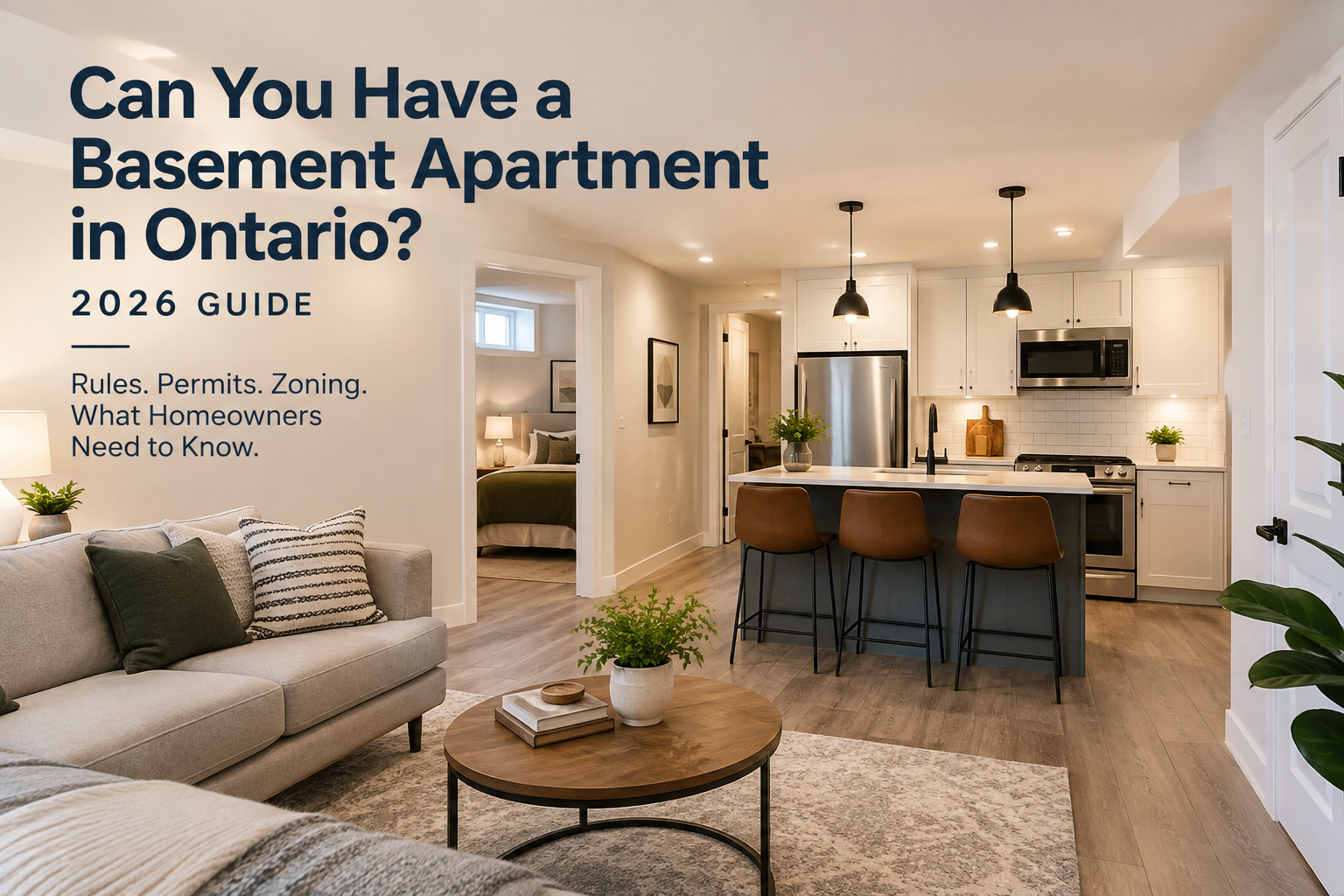
    Can You Have a Basement Apartment in Ontario?

    Ontario allows additional residential units on many residential properties, but turning a basement into an apartment involves more than adding a kitchen and bathroom. Zoning, building permits, fire and life-safety requirements, municipal rules and the individual property all matter.

    Can you have a basement apartment in Ontario? 2026 guide to basement apartment rules, permits and zoning.

    Quick answer: Yes. Basement apartments can be permitted in Ontario, and provincial planning rules allow additional residential units on many qualifying properties. However, an individual basement apartment still needs to comply with applicable zoning, building-permit, Building Code and other legal requirements. An existing basement apartment should not automatically be assumed to be legal simply because it is currently occupied or has existed for many years.

    What Is a Basement Apartment?

    A basement apartment is generally a separate residential unit located wholly or partly in the basement of a house.

    Depending on the municipality and applicable legislation, you may also see terms such as:

    • Additional residential unit (ARU)
    • Additional dwelling unit (ADU)
    • Secondary suite
    • Second unit
    • Accessory apartment
    • Basement suite
    • In-law suite

    The terminology can differ, but the important issue is whether the space constitutes a separate residential unit and whether it complies with the requirements that apply to the property.

    How Many Units Can You Have in an Ontario House?

    Ontario’s additional residential unit framework generally provides as-of-right permission for up to three residential units on qualifying urban residential land.

    For a qualifying detached house, semi-detached house or rowhouse, the provincial framework generally contemplates configurations such as:

    • Three residential units within the main house; or
    • Up to two residential units in the main house plus one residential unit in an ancillary building or structure.

    A basement apartment could therefore be one of the residential units within the main house.

    Some municipalities have gone further and permit additional units or different configurations in certain circumstances. This is why the municipality and individual property still need to be checked.

    What Makes a Basement Apartment Legal in Ontario?

    There isn’t one single province-wide checklist that makes every basement apartment legal. Several layers of regulation can apply.

    1. Zoning

    The property must comply with applicable planning and zoning requirements. Ontario’s Planning Act provides significant protection for additional residential units, but municipalities still administer zoning and property-specific development standards.

    Depending on the property, relevant considerations can include parking, entrances, setbacks, servicing and other local requirements.

    2. Building Permit

    Creating a new basement apartment generally requires a building permit from the local municipality.

    The permit process allows the municipality to review the proposed construction for compliance with applicable building requirements and other applicable law.

    3. Building Code Requirements

    The unit must meet the applicable Ontario Building Code requirements. Depending on the project and building, this can involve matters such as:

    • Ceiling height
    • Exits and means of egress
    • Windows
    • Fire separations
    • Smoke alarms
    • Carbon monoxide alarms
    • Heating and ventilation
    • Plumbing
    • Electrical systems
    • Structural changes
    • Sound transmission

    4. Electrical Work

    Electrical work is regulated separately from the municipal building-permit process. Electrical alterations should be completed and inspected as required under Ontario’s electrical-safety framework.

    5. Municipal Registration or Licensing

    Some municipalities require additional residential units or certain rental properties to be registered or licensed. Others use different local processes.

    This is one reason a homeowner should check the specific municipality rather than relying only on general Ontario information.

    Existing Does Not Automatically Mean Legal

    One of the most important things for Ontario home buyers to understand is that the physical existence of a basement apartment does not, by itself, prove that the unit is legal.

    A listing might describe a property as having a basement apartment, second kitchen, in-law suite or separate entrance. Those features do not necessarily establish that the space was legally created or approved as a separate dwelling unit.

    If the basement unit is important to your purchase, investigate its status rather than relying on the description alone.

    Buying a House With a Basement Apartment

    A basement apartment can make a property more attractive to a buyer who wants rental income, multigenerational living space or additional flexibility. But the status of the unit should be investigated during the purchase process.

    Questions Worth Asking

    • Was a building permit obtained for the basement apartment?
    • Were the required inspections completed?
    • Was final occupancy or other required approval obtained?
    • Does the municipality have records for the unit?
    • Does the current zoning permit the configuration?
    • Is municipal registration or licensing required?
    • Were electrical alterations properly inspected?
    • Are there current tenants?
    • What tenancy documentation exists?
    • Is the buyer relying on the rental income to qualify for financing?

    The appropriate investigation depends on the individual property and transaction. A buyer may need information from the municipality and advice from their real estate representative, lawyer, lender, insurer, home inspector or other appropriate professional.

    Can You Convert an Existing Basement Into an Apartment?

    Potentially. The first step should be determining whether the proposed unit can comply with the requirements applicable to the property.

    Before spending significant money on construction, contact the municipality’s planning and building departments and determine what approvals are required.

    A Typical Process May Include:

    1. Review the property’s zoning.
    2. Check municipal ARU requirements.
    3. Assess whether the basement can meet Building Code requirements.
    4. Prepare drawings.
    5. Apply for the required building permit.
    6. Complete construction.
    7. Arrange required inspections.
    8. Complete any municipal registration or licensing process that applies.

    Do not assume that completing the construction first and obtaining approval later will be easier. Unpermitted work can create additional cost and complications.

    Do You Need a Separate Entrance?

    A separate exterior entrance is common for basement apartments, but whether a particular entrance arrangement complies depends on the design of the unit and the applicable building and zoning requirements.

    Adding a new basement entrance can itself require a building permit and may involve structural work, grading, drainage, setbacks or other municipal requirements.

    Do not cut a new basement entrance into a foundation based solely on the assumption that a separate entrance is allowed.

    Do You Need Extra Parking?

    Parking requirements need to be checked against the rules that apply to the property.

    Ontario’s ARU framework limits certain municipal parking requirements associated with provincially protected additional residential units and permits tandem parking in applicable circumstances.

    However, the exact parking situation can still differ by property and municipality. Do not assume that adding an apartment automatically requires a new driveway space—or that no additional parking consideration applies.

    Basement Apartment Rules Vary by Municipality

    This is where Ontario basement-apartment research becomes property-specific.

    Provincial legislation establishes broad additional-unit permissions, while municipalities administer zoning, building permits and various local requirements. Some municipalities also permit more units than the basic provincial framework in certain circumstances.

    Ontario Home Intel maintains municipal property guides covering local zoning, permits, ARUs and related property rules.

    Thinking About Buying a Home With Rental Potential?

    A basement apartment can affect a property’s income potential, financing, insurance, future renovations and resale. If the unit matters to your purchase decision, investigate its status before relying on it.

    Frequently Asked Questions

    Are basement apartments legal in Ontario?

    Yes, basement apartments can be legal in Ontario. Provincial planning legislation protects additional residential units on many qualifying properties, but the individual apartment must still comply with applicable zoning, building, permit and other legal requirements.

    Do I need a building permit for a basement apartment?

    Creating a new second unit in a house generally requires a building permit from the local municipality. The municipality will identify the documents, plans and inspections required for the project.

    Is an existing basement apartment automatically legal?

    No. The fact that a basement apartment exists or is currently rented does not by itself prove that the unit was legally established or complies with applicable requirements.

    Can I rent out my basement in Ontario?

    A legal residential unit can generally be rented subject to the laws and requirements that apply to the property and tenancy. Municipal licensing or registration may also apply in some municipalities.

    Can a basement apartment have its own kitchen?

    A self-contained additional residential unit commonly has its own kitchen, bathroom and living or sleeping areas. The construction and installation of these facilities must comply with applicable building, plumbing, electrical and other requirements.

    Can I add a basement apartment without changing the zoning?

    Ontario’s additional residential unit framework provides as-of-right permissions on many qualifying properties, meaning a rezoning may not be required simply to permit the residential use. However, the individual property still needs to comply with applicable requirements, and a minor variance or other approval could be necessary depending on the proposed work.

    How do I check whether a basement apartment is legal?

    Start with the municipality. Ask about zoning, building permits, inspections and any registration or licensing records that apply to the property. Depending on the situation, additional professional review may also be appropriate.

    Last reviewed: September 6, 2026.

    Disclaimer: Ontario Home Intel provides general educational information only. This article is not intended as real estate, legal, financial, tax, lending, appraisal, inspection, engineering, building-code, planning or other professional advice. Provincial legislation, municipal zoning, building requirements and property-specific circumstances can change or differ. Verify information with the applicable municipality and other appropriate authorities or professionals before making a decision. Using this website or making an inquiry does not create a real estate representation relationship.